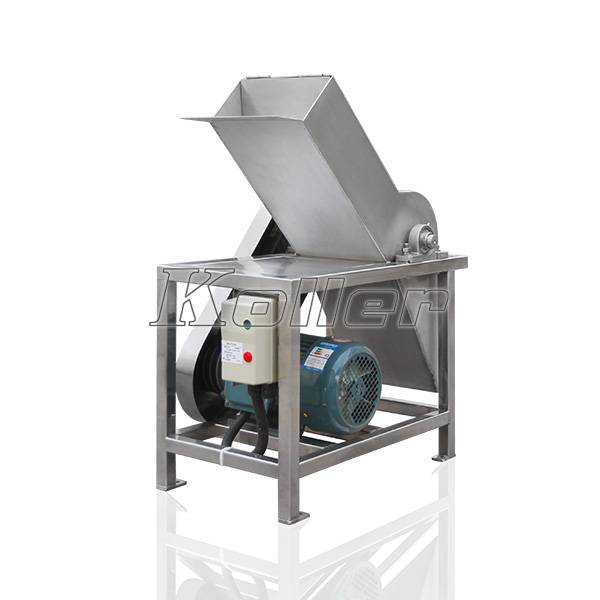
Анонца ice crusher machine for food processing provides a practical way to produce crushed ice for temperature control during grinding, mixing, cutting, sorting, and other heat-generating operations.
Stable temperature control helps maintain product quality and limit conditions that support microbial growth. The equipment also needs to provide suitable ice particle sizes, Последовательный выход, and hygienic operation for different processing requirements.
This article covers how crushed ice supports temperature control, the sanitary requirements for ice crusher machines, common food-processing applications, and key equipment specifications.
Why Food Processing Needs Reliable Ice Cooling
Heat can build up during food processing and affect products in different ways, so stable cooling conditions help keep production quality and handling requirements under control.
How Processing Heat Affects Food Temperature
Grinding, mixing, cutting, sorting, and other processing activities can raise product temperature through friction, mechanical action, and repeated handling. Continuous production can make this more difficult to control as products move through multiple processing stages.
The amount of heat generated depends on the processing method, equipment load, production speed, and product characteristics. Moisture content, текстура, and product size can also affect how quickly food gains or loses heat. As a result, different products and processes may require different cooling conditions.
What Happens When Temperature Is Not Properly Controlled
Excessive heat can affect food texture, appearance, последовательность, and handling. Temperature fluctuations may also make processing conditions less stable, particularly when products pass through several operations before packaging or storage.
Temperature also affects conditions that support microbial growth. Prolonged exposure to unsuitable temperatures can increase this risk, although cooling alone does not ensure food safety. Hygienic handling, sanitation, suitable water and ice quality, and proper storage remain essential.
For continuous production, reliable cooling helps limit unwanted temperature increases and maintain more consistent processing conditions.
How an Машина дробилки льда Supports Food Processing
Consistent ice supply, suitable particle size, and smooth workflow integration allow an ice crusher machine to meet the practical cooling demands of food processing operations.
Consistent Crushed Ice Output
Food processing lines may need crushed ice at several points during production, so an unstable ice supply can interrupt normal operations. Manual crushing also makes it difficult to maintain a consistent quantity from one batch to another, especially when production runs for long periods.
An ice crusher machine provides a more controlled supply of crushed ice and reduces the need for repeated manual handling. This helps operators maintain a steady flow of ice when the process requires regular additions. Capacity still needs to match the actual demand. A machine with insufficient output may create delays, while excessive capacity can add unnecessary equipment and operating costs.
Controlled Ice Particle Size
The size of crushed ice affects how it performs in different processing conditions. Smaller particles can spread more easily around irregular products and provide closer contact, while larger particles may offer easier handling in applications where slower melting is preferred.
Particle size also affects how ice moves through the production system. Ice that needs to pass through feeders, conveyors, or mixers must suit the equipment and feeding method. Consistent particle size makes this movement more predictable and helps operators maintain similar processing conditions from one production run to another.
Integration With the Processing Workflow
An ice crusher machine delivers greater value when it fits naturally into the existing production process. The equipment should connect logically with ice storage, feeding systems, conveyors, mixers, or other points where crushed ice enters the operation.
Key integration factors include:
- Ice storage: Provides enough space to maintain a steady supply between crushing and use.
- Feeding and conveying: Moves crushed ice efficiently to the required processing point.
- Installation space: Allows the crusher and related equipment to fit within the available production area.
- Electrical requirements: Ensures the machine can operate safely with the site’s existing power supply.
The installation layout also affects labor and handling. If operators need to move crushed ice manually over long distances or transfer it between several containers, the process can become slower and less efficient. A well-planned setup keeps ice moving from crushing to application with fewer unnecessary handling steps.
How the Right Ice Crusher Machine Supports Efficient Processing
Efficient ice handling helps food processing operations maintain stable cooling, reduce unnecessary labor, and keep production moving when crushed ice is required across multiple processing stages.
A well-matched ice crusher machine can provide several practical benefits:
- More stable cooling conditions: Consistent crushed ice output helps maintain a more stable supply of cooling material during continuous processing, especially when ice is required at multiple production points.
- Fewer interruptions during production: Adequate machine capacity helps maintain the required ice supply as processing volume changes, reducing delays caused by insufficient crushed ice.
- Smoother ice handling: Suitable particle size allows crushed ice to move more easily through feeding, mixing, conveying, and storage systems, reducing problems caused by unsuitable ice formats.
- Less unnecessary manual handling: When the crusher is positioned and connected appropriately, operators can move ice between crushing and application points with fewer additional transfers.
- More manageable cleaning and maintenance: Sanitary construction and accessible components make routine cleaning, inspection, and maintenance easier to incorporate into daily production.
These benefits depend on the complete equipment setup rather than the crusher alone. Product characteristics, production volume, required ice output, particle size, Доступное пространство, and the existing workflow should all be considered when specifying the machine.
Find the Right Ice Crusher for Food Processing
Food Safety Requirements for Ice Crusher Machines
Safe ice handling depends on more than the crusher itself. Suitable materials, accessible surfaces, and controlled ice handling help reduce avoidable contamination risks.
Sanitary Materials and Equipment Design
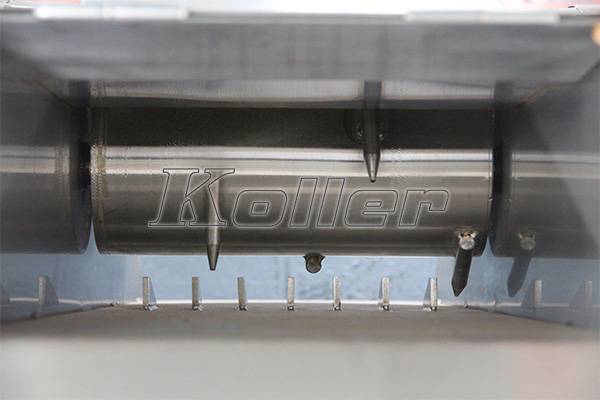
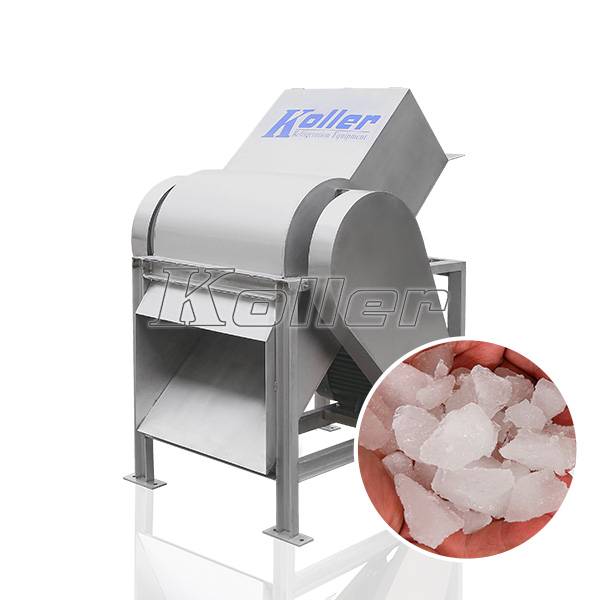
An ice crusher used in пищевая промышленность should have food-contact surfaces made from materials that suit the product and cleaning conditions. Stainless steel is widely used in food-processing equipment because it provides durability and works well in wet environments.
The design should also reduce places where moisture, ice residue, or food particles can collect. Smooth and accessible surfaces make it easier to inspect the equipment and remove residue during routine cleaning. Joints, corners, and enclosed areas deserve particular attention because they can be harder to clean when the machine operates frequently.
A sanitary design therefore needs to support both production and daily maintenance. Operators should be able to reach important food-contact areas without unnecessary disassembly, while the machine should remain suitable for the cleaning methods used at the facility.
Cleaning and Maintenance Access
Regular cleaning becomes especially important when an ice crusher operates in a wet environment. Water and melted ice can remain around the crushing chamber, discharge area, and other components, creating areas that require routine inspection.
Easy access allows operators to remove residue, check surfaces, and identify buildup before it becomes harder to clean. The cleaning process should also fit the production schedule so that routine sanitation does not create unnecessary downtime.
Installation planning plays a role here as well. Sufficient space around the machine allows operators to access key components safely and carry out cleaning and maintenance without working in restricted areas.
Hygienic Ice Production and Handling
The hygiene of the ice itself is equally important, particularly when crushed ice comes into direct contact with food. The water used to produce the ice should meet the applicable requirements for its intended food-processing use, while storage and handling should protect the ice after production.
Чистый, dedicated containers and tools can reduce unnecessary contact during transfer. Operators should also keep crushed ice away from raw materials, waste, химикаты, and other potential contamination sources.
Maintaining hygiene throughout ice production, crushing, хранилище, and final application helps prevent the cooling process from introducing avoidable contamination into food processing.
Food Processing Applications for Ice Crusher Machines
Different food products face different temperature challenges during processing, so cooling methods must match the product, processing conditions, and required temperature range.
Seafood Processing and Handling
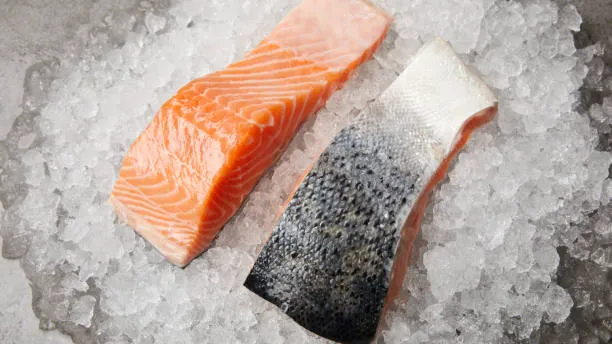
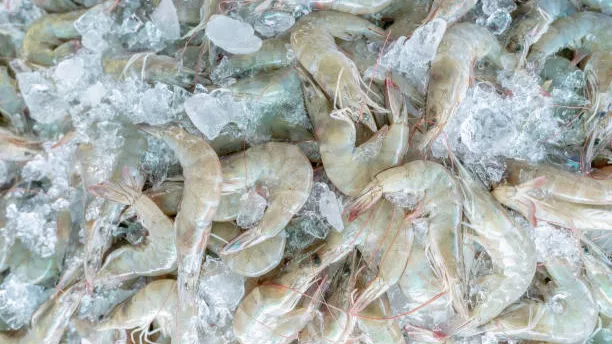
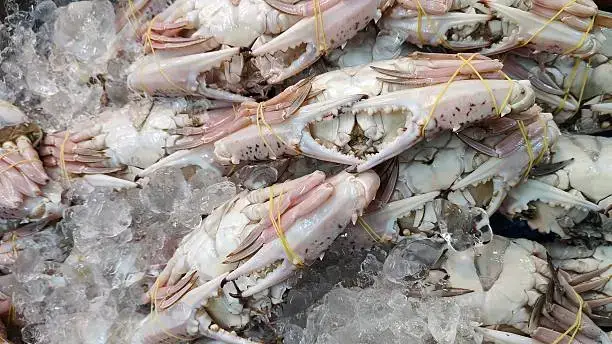
Seafood can warm quickly during sorting, trimming, grading, and packing, especially when products remain exposed during repeated handling. Maintaining a cold environment helps limit unwanted temperature increases between processing steps.
Fish, креветка, and similar products also have uneven surfaces and are often handled in bulk. Small ice pieces can move around individual products more closely, helping maintain contact during short-term holding and processing. The cooling system must also provide enough ice to keep pace with the processing flow.
For higher-volume seafood operations, consistent ice availability becomes particularly important. The crusher should provide a suitable particle size and output without creating additional manual handling between ice production, crushing, and application.
Meat, Poultry, and Food Mixing
Grinding, cutting, and mixing can introduce mechanical heat into meat and poultry products. When several operations take place in sequence, this added heat can make it harder to maintain the required product temperature.
In some meat-processing applications, processors add crushed ice during mixing to help manage product temperature while ingredients are combined. The amount depends on the recipe, оборудование, and target temperature. Excessive ice can change the product’s moisture balance, while unsuitable particle sizes may affect feeding and mixing.
Several factors should therefore work together:
- Ice quantity: Match the amount to the heat generated, formulation, and target product temperature.
- Particle size: Use a size that works with the mixing equipment and provides a suitable melting rate.
- Product formulation: Account for the water added as the ice melts.
- Equipment compatibility: Ensure the ice can enter and move through the processing system without disrupting production.
These requirements make equipment selection application-specific. A processor may need to consider both the required ice output and how the crushed ice will enter the mixing process.
Produce and Fresh-Cut Processing
Produce faces different cooling needs after washing, cutting, and other preparation steps. Once fruits and vegetables are cut, more surface area becomes exposed to the surrounding environment, which can increase heat transfer and moisture loss.
Bulk handling creates another challenge because pieces can sit at different positions within a container or processing area. A distributed layer of small ice pieces can surround more of the produce and help maintain a colder environment during short-term handling and holding.
Fresh-cut products also require careful attention to hygiene and product quality. Ice that contacts the product should meet the applicable food-processing requirements, while the cooling method should suit the product’s texture, moisture level, and handling conditions.
What to Consider When Specifying an Ice Crusher Machine
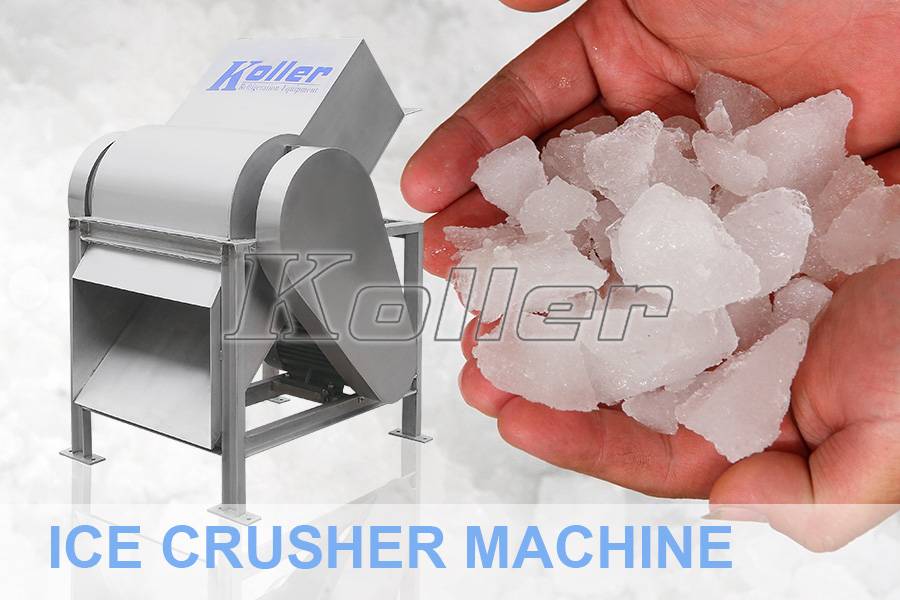
A suitable machine should match the required ice volume, particle size, existing ice supply, and production conditions rather than rely on capacity alone.
Capacity and Ice Production Demand
Capacity is one of the first specifications to confirm because insufficient ice output can interrupt processing. Start with the amount of crushed ice required per hour and per day, then compare those figures with the production schedule.
Average demand alone may not provide a reliable basis for specification. Seasonal production, larger orders, longer operating hours, or changes in product volume can increase ice requirements. The machine should therefore provide enough practical capacity to handle normal production while allowing reasonable room for higher demand.
Operators should also consider how much ice the system can store and how often the crusher needs to operate. A suitable setup should keep ice available without requiring constant manual intervention.
Ice Type and Particle Size
The crusher should match both the type of ice available and the particle size required by the application. Different ice formats behave differently during crushing, feeding, mixing, хранилище, and cooling, so the existing ice-making system should be checked before selecting the crusher.
Particle size should also match the product and processing method. The required size may depend on how the ice contacts the product, how quickly it should melt, and whether the crushed ice must pass through other equipment.
Key compatibility points include:
- Ice supply: Confirm that the crusher can process the type and size of ice produced by the existing ice machine.
- Particle size: Define the required crushed ice size according to the application and downstream process.
- Equipment compatibility: Check whether the crushed ice can move smoothly through feeders, conveyors, mixers, or storage systems.
Sanitary Design and Processing Compatibility
Food-processing applications require the machine to work within the site’s hygiene and operating conditions. Food-contact materials, corrosion resistance, cleaning access, and maintenance requirements should all be reviewed before installation.
The surrounding production environment also affects machine selection. Available floor space, electrical supply, feeding direction, discharge position, and connections with downstream equipment can determine whether the crusher fits the existing line.
A practical specification should therefore consider the complete operating environment rather than the crusher alone. Confirming these details before purchase can reduce installation changes and help the equipment operate more smoothly after commissioning.
You may be interested in: Как выбрать подходящую коммерческую машину для дробления льда для вашего бизнеса
Последние мысли
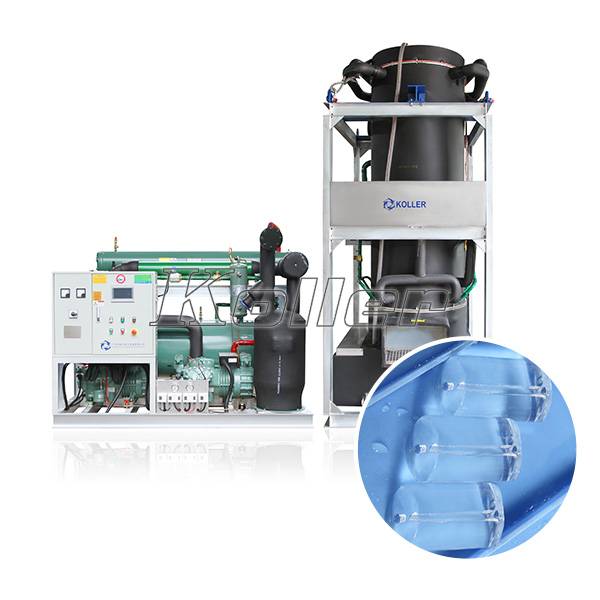
An ice crusher machine for food processing can provide a consistent supply of crushed ice for cooling during different production stages. Suitable output, particle size, ice type, sanitary construction, and processing capacity all contribute to reliable operation and easier ice handling. The equipment should also fit the existing workflow and cleaning requirements of the facility.
For food processing operations, matching the crusher with actual cooling needs can help maintain stable production without unnecessary handling or capacity limitations. Коллер provides industrial ice crusher solutions for different food processing applications. Contact Koller to discuss your ice type, required capacity, and processing conditions.
Часто задаваемые вопросы
Can an ice crusher machine process different types of ice?
An ice crusher machine can process different forms of ice depending on its design and crushing mechanism. Блок льда, трубчатый лед, and cube ice differ in shape and hardness, so the crusher should be matched with the type of ice available in the processing facility.
Can crushed ice come into direct contact with food?
Crushed ice can be used for direct food contact when the ice, water source, and handling equipment meet applicable food safety requirements. Components that contact the ice should use suitable materials and allow effective cleaning and sanitation to support hygienic processing.
Can an ice crusher be integrated into an existing food processing line?
Да. An industrial ice crusher can be positioned between the ice supply and the cooling or mixing stage according to the production layout. The installation should account for ice transfer, discharge, Доступное пространство, operator access, and cleaning requirements.
Does a food processing facility need an ice storage system?
An ice storage system can be useful when ice production and consumption occur at different times or when the facility experiences peak cooling demand. Storage capacity should reflect the production schedule, expected ice usage, and the time required to transfer crushed ice to the processing area.
What maintenance does a food processing ice crusher require?
Регулярная уборка, inspection of ice-contact components, and checks of the crushing mechanism help maintain hygienic operation and consistent performance. Maintenance procedures should follow the equipment design, operating frequency, and sanitation requirements of the food processing facility.